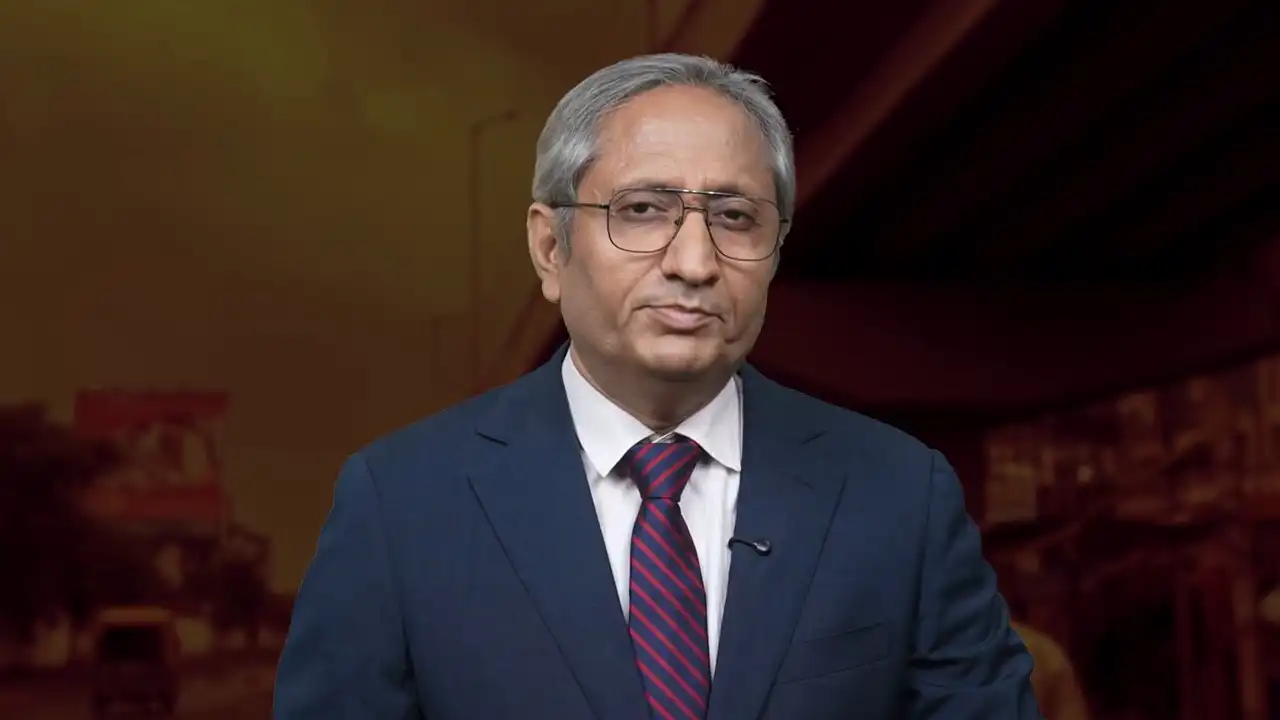
When billionaire Gautam Adani’s group took over NDTV’s controlling stake in 2022, it triggered one of the most dramatic shifts in Indian media in decades. For Ravish Kumar, the Magsaysay award-winning anchor who spent 27 years building a reputation for principled reporting, the moment became a turning point. In November 2022, he resigned from NDTV, citing worries about editorial independence, institutional pressure, and his inability to continue truth-telling under a transformed regime.
His exit followed the departure of NDTV’s founders, Prannoy and Radhika Roy, from their director roles at the controlling company RRPRH. The board changes, seen widely as part of a “hostile takeover,” raised alarm bells across journalism circles about the erosion of press freedom in India.
In a 24-minute monologue posted on his YouTube channel, Ravish called India’s media landscape a “dark age” and reaffirmed his decision to work independently. He thanked his years at NDTV, mourned leaving the “red mic,” and urged viewers to keep questioning despite growing challenges.
What happened next turned out to be a kind of reinvention. He launched Ravish Kumar Official in late 2022, and by December, his subscriber base had exploded. Within hours, he had crossed 200,000 subscribers; by May 2024, his channel had surpassed 10 million, and today it stands above 12 million.
On his channel, Ravish produces in-depth analysis of politics, social issues, and peer interviews, without the institutional constraints he once faced.
His videos often outshine NDTV’s own digital stats in terms of traction and impact. Reportedly, his monthly earnings now rival what he used to make from television.
This shift reflects a bigger trend: creators and journalists reclaiming narrative space online. They no longer need big studios or TV networks to reach millions.
Ravish’s digital platform lets him choose topics, push boundaries, and speak directly to his audience, something harder to do under corporate or political oversight.
His story is also resonant because it mirrors the fears many in India’s journalism community feel. He has repeatedly spoken about threats, censorship, and the pressure on newsrooms to toe the line.
This becomes true in the context of a recent Delhi High Court order asking some prominent journalists like Paranjoy Guha Thakurta, Ravish Kumar, Akash Banerjee, and media platforms such as Newslaundry and The Wire, to remove content deemed defamatory against the Adani Group.
In some interviews, Ravish Kumar has described stepping away from TV not just as a career move but as a moral necessity.
Yet he hasn’t gone quiet. Through his videos, Ravish tackles difficult questions about media bias, government accountability, and civic rights with a voice free of commercial strings. This independence, critics say, has become his greatest strength.
In many ways, Ravish Kumar’s journey shows how digital platforms can resurrect journalistic integrity when traditional institutions falter.
His shift from primetime TV to YouTube isn’t just a platform change; it’s a declaration: that truth, accountability, and voice matter most where power seeks silence.