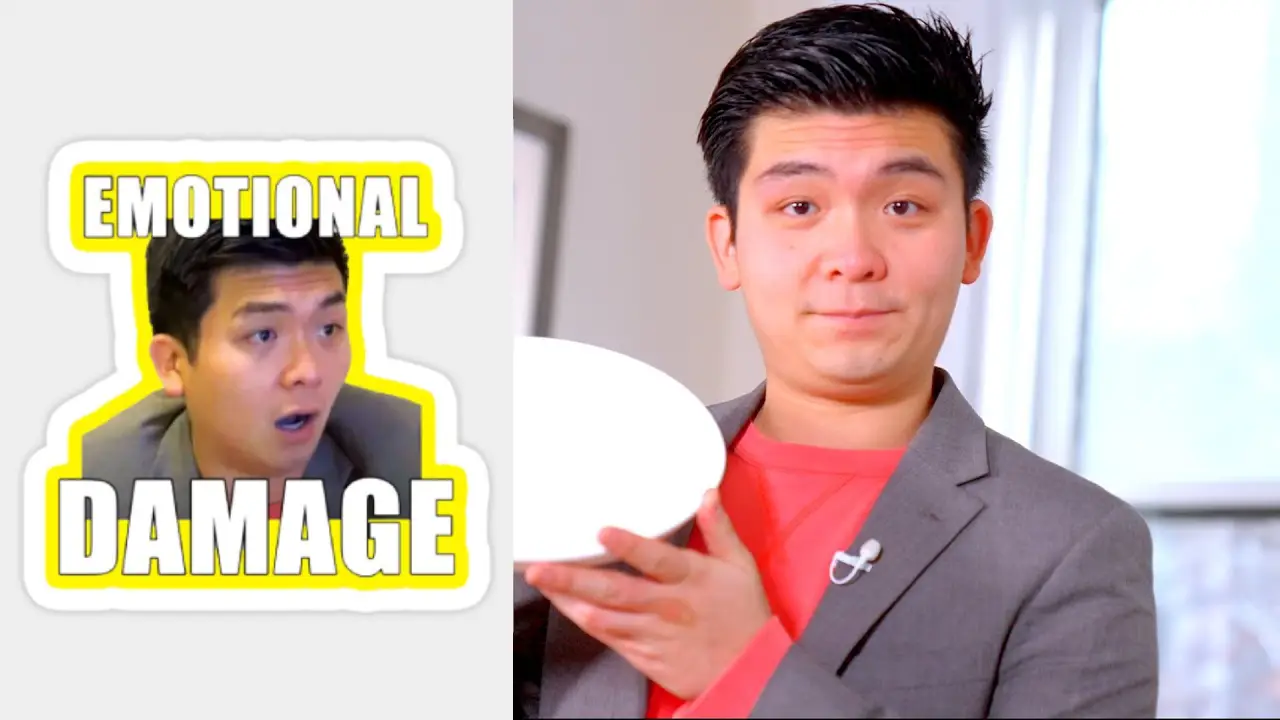
Global comedy sensation and viral “Emotional Damage” meme creator Steven He revealed that it took 220 failed uploads before he saw his first major breakthrough on YouTube.
Speaking on a recent episode of the Driven Podcast, the Irish-Chinese creator and actor detailed his transition from a struggling New York City performer to a premier digital entrepreneur.
He emphasized that his success was not an accident but the result of a rigorous “failure management” strategy rooted in mathematical optimization and data analysis.
He, who currently commands millions of subscribers across his digital platforms, entered the creator economy in 2020 after the COVID-19 pandemic halted a lucrative national commercial contract.
Initially viewing YouTube as a strategy to gain leverage in traditional Hollywood, he applied his background in mathematics to study the YouTube algorithm. He treated his early videos as a “training arc,” focusing on metrics like retention and click-through rate.
The creator shared that his most famous one-liner, “Emotional Damage,” which has been viewed over seven billion times across the internet, was filmed on a whim in a park in Ireland.
Despite the massive scale of the meme, He noted that individual video earnings from AdSense are often lower than fans expect for short comedy sketches.
Instead, he focuses on building “systems” where a team manages different content types to ensure long-term profitability and consistent viewership.
Aspiring creators should note He’s cautious approach to YouTube Shorts. While acknowledging their reach, He criticized the format for removing “viewer intention” and reducing the depth of the relationship between creators and their audience.
He advised new creators to “study” their favorite channels for a month before starting, treating content creation as a professional delivery rather than just artistic expression.
Reflecting on his financial journey, He admitted that his biggest mistake was spending multiple six figures on a high-production narrative show that “tanked” his channel’s performance by 80 percent. He explained that his audience had subscribed for his specific three-minute comedy format and was not ready for a sudden pivot to longer, more expensive episodic content.
He now advocates for “10 percent pivots,” where creators make small, incremental changes to their style rather than radical shifts that risk alienating their core fanbase.
Today, He operates under his production company, Failure Management Productions, and is currently experimenting with scaling his production budgets specifically for action choreography.
He maintains a lean team, prioritizing character and work ethic over technical resumes, and continues to optimize his content by treating every failure as a data point for future success.