
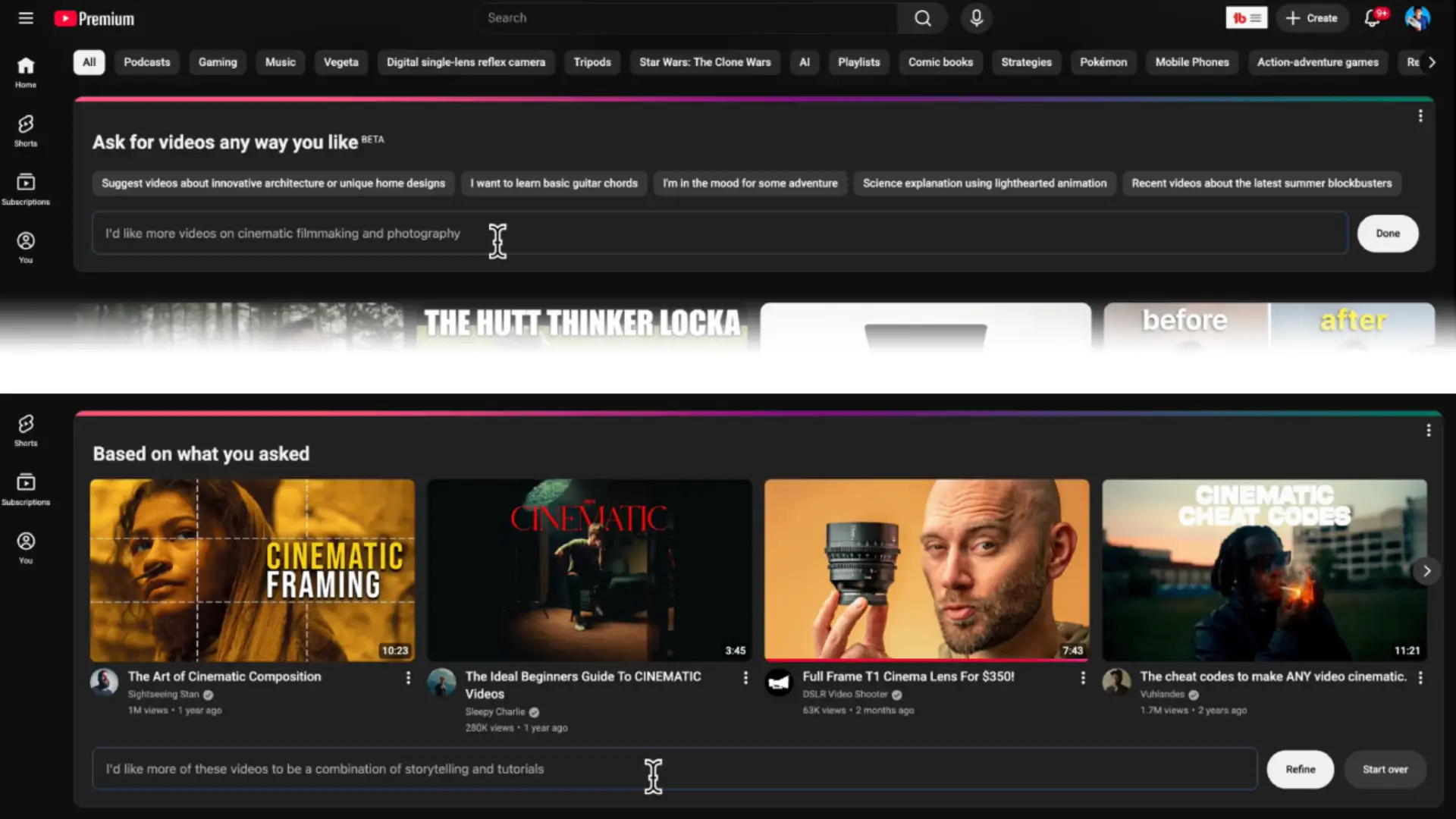
YouTube is testing a new AI feature on its homepage that allows users to prompt the platform for video recommendations using natural language.
The experimental feature, titled “Ask for videos any way you like,” places a large text input field on the user’s homepage.
Instead of scrolling through the standard algorithmic feed or using the traditional search bar, users can type specific requests such as “innovative architecture” or “cinematic filmmaking guides.” The system then processes the request and generates a horizontal row of video results labelled “Based on what you asked.”
This development marks a significant shift in how users discover content on the Google-owned platform.
While the traditional search bar looks for keywords in titles and descriptions, this new conversational tool uses generative AI to understand the user’s intent. It allows for more complex, sentence-based queries similar to how one might interact with ChatGPT or Gemini.
The interface appears primarily for YouTube Premium subscribers in select regions, including the United States, as part of a limited beta test.
In the demonstration observed, the feature allows users to refine their results after the initial prompt, making the discovery process interactive and conversational.
🚨 YOUTUBE UPDATE:
— Roberto Blake 🇺🇸🇵🇦 Creative Entrepreneur (@robertoblake) December 28, 2025
YouTube’s new Homepage feature will let you PROMPT the videos you want to see!
This “Ask for Videos Any Way You Like” feature is in BETA, and will let you directly ask for video recommendations and refine the results! Demo down below 👇🏾 pic.twitter.com/gXPPoiBDYk
This homepage experiment complements the “Ask” button that YouTube recently introduced under specific videos.
While the “Ask” button allows viewers to query the content of a single video, this new homepage tool applies that same conversational logic to the entire platform’s library to surface new content.
For content creators, this shift underscores the importance of clear, context-rich metadata. As YouTube moves toward AI-driven discovery, the algorithm is increasingly prioritising the “meaning” and context of a video over simple keyword matching. This means creators may need to focus more on how their content answers specific viewer questions or needs.
YouTube has not yet announced a global rollout date for the feature. It remains part of the company’s broader initiative to integrate generative AI across its ecosystem, competing with the evolving search capabilities of platforms like TikTok and Instagram.