YouTube has announced a major new feature aimed at tackling one of the internet’s fastest-growing problems, deepfakes and unauthorised AI-generated videos. The new AI likeness detection tool is designed to help creators find and remove videos that use their face, voice, or overall likeness without consent.
As deepfakes become more realistic and widespread, this move marks one of YouTube’s strongest steps yet to safeguard creators and restore trust in online video content.
Rolling out in phases to YouTube’s Partner Program members, the likeness detection system works much like YouTube’s Content ID feature, but instead of tracking copyrighted songs or visuals, it scans for faces and voices. Creators who want to use the tool must first verify their identity using a government ID and a quick facial scan.
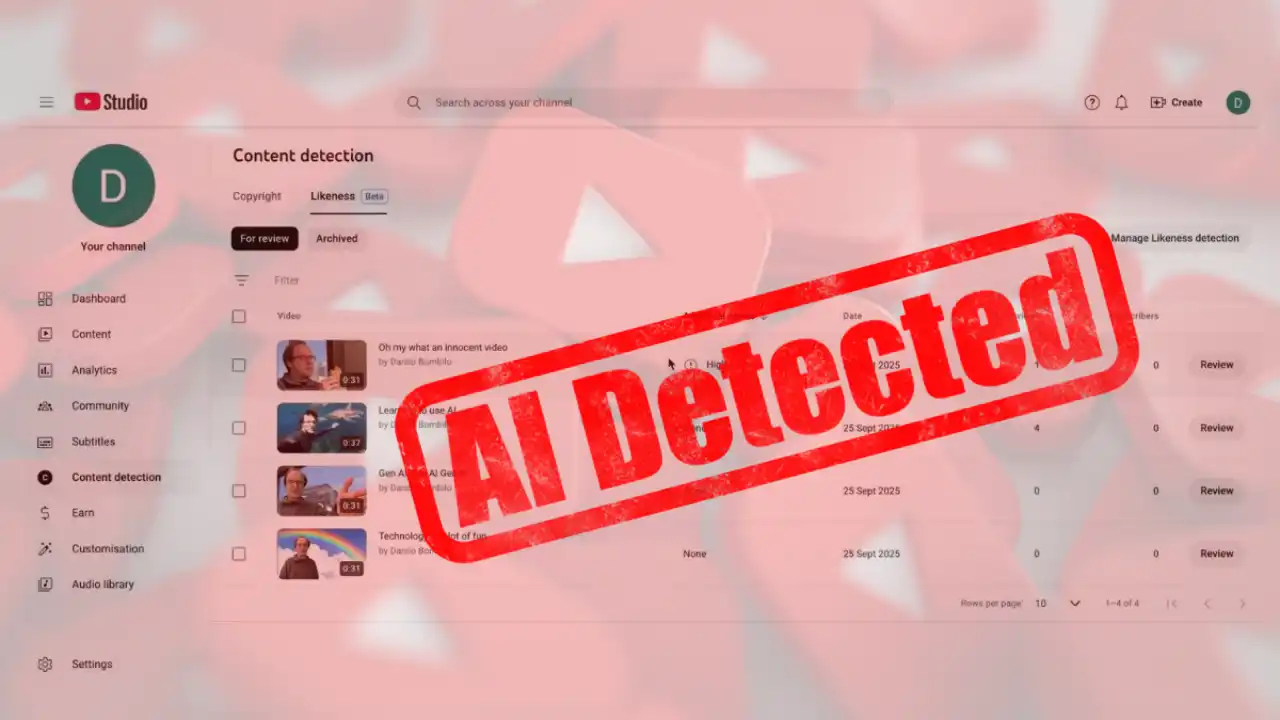
Once verified, YouTube’s AI begins scanning new uploads across the platform for potential matches with the registered creator’s likeness. When the system finds a possible deepfake or AI-generated clone, it alerts the creator through a new “Content Detection” tab in YouTube Studio.
The notification includes the flagged video’s title, uploader details, and a snippet of the content, so the creator can review it and decide whether to file for removal or take other action.
This means that if someone uploads a fake interview, a manipulated video, or an AI-generated voice clip pretending to be a creator, YouTube can detect it and notify the real person before it spreads further.
Interestingly, YouTube’s protection isn’t limited to big creators or influencers. The company has expanded its privacy complaint process so that any user, even someone without a YouTube channel, can request the removal of a video that uses their likeness without permission.
If someone discovers an AI-generated version of themselves circulating on the platform, they can file a report describing the issue. YouTube will then assess the case based on several factors, whether the video clearly discloses that it’s AI-generated, whether it could mislead viewers, and whether it’s being used as parody or news commentary.
However, not every AI-created clip will be removed automatically. YouTube has emphasised the importance of balancing privacy protection with free expression, especially for satire, commentary, and journalism.
The feature comes at a time when AI deepfakes have become a global concern. In 2025 alone, several viral cases have shown fake videos being used in scams, political misinformation, and personal reputation attacks.
Celebrities, influencers, and even private citizens have found themselves victims of convincing digital impersonations created with freely available AI tools.
Governments around the world are urging tech platforms to regulate AI-generated media more strictly, with calls for clear labelling and faster response systems. YouTube’s new tool seems to be an answer to that growing pressure, providing a practical, creator-driven solution.
By allowing creators to detect and report AI misuse early, YouTube is not only protecting privacy but also reinforcing accountability in a digital world where anyone’s face or voice can be copied in seconds.
For now, the tool is available to verified YouTube Partner Program members, but the company plans to make it accessible to all monetised creators by early 2026. Setting up the feature requires creators to provide a valid ID and a facial scan, which YouTube says will be securely stored and used only for ongoing likeness protection.
While the system can automatically identify suspicious uploads, it doesn’t guarantee instant removal. Each flagged video will be reviewed through YouTube’s updated dispute process to ensure fair handling, especially in cases involving parody, commentary, or fair use.
YouTube’s move follows months of concern over AI misuse, signalling a shift toward stronger user protection and platform responsibility. Reports from The Verge, TechCrunch, and Indian Express confirm that this is the first large-scale, AI-driven likeness detection system by a major social media platform.
By giving creators and everyday users the ability to find and fight deepfakes in real time, YouTube is setting a new benchmark for digital safety. In a world where trust in online visuals is rapidly eroding, this initiative could help rebuild confidence and make the internet just a bit more human again.