India is currently witnessing a digital revolution that has transformed the country into one of the largest podcast markets globally. Understanding this landscape is essential for anyone looking at podcasting, as podcasts have become a primary destination for both deep-dive education and brand influence in the modern age.
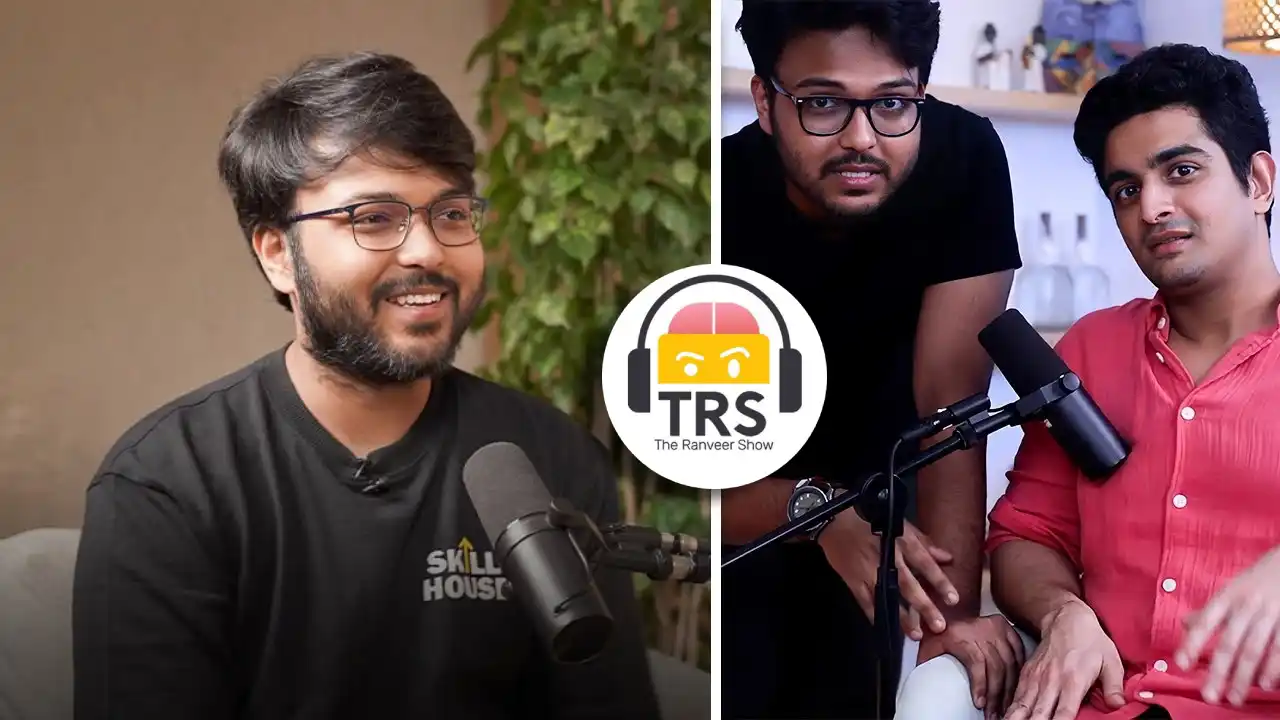
Nachiket Nisal, the Chief Operating Officer and operations head at BeerBiceps, revealed the high-stakes strategy behind India’s most successful podcasting empire, The Ranveer Show (TRS), during our podcast sit-down.
Nisal, who has steered the organization through over 750 of its 850-plus episodes, manages a powerhouse team of 80 specialists for popular entrepreneur and creator Ranveer Allahbadia.
He explained that the secret to their massive scale is not just individual creativity, but a rigorous reliance on systems and team structures that allow the business to run autonomously even when the lead host is away.
Nisal broke down the myth of saturation in the Indian creator economy, noting that with 700 million people now having internet access, the podcasting niche is actually in its infancy.
He dismissed the idea that high-end equipment is a barrier to entry, advising new creators to start with a smartphone and a simple mic.
According to Nisal, content value is the only metric that truly matters, as a “chef” (creator) must focus entirely on what the audience is hungry to consume.
One of the most striking revelations from our talk was the current revenue potential for top-tier creators in the Indian market. Nisal confirmed that a podcast consistently averaging 100K views per episode can command between ₹2 lakh and ₹3 lakh per episode for brand collaborations.
This premium pricing depends heavily on the audience’s paying capacity, which is dictated by mature age demographics and Tier-1 city locations.
He also pointed to community monetisation, selling high-value courses or services directly to loyal listeners, like what they’re doing with upskilling platform BeerBiceps SkillHouse, as the key to long-term financial stability in the creator economy.
To maintain their dominance, Nisal’s team utilizes the “Machine Gun” strategy for short-form content distribution. This involves “firing” a rapid sequence of reels and shorts across platforms the moment a podcast goes live to create a sense of ubiquity and trigger the algorithm.
For more technical or research-heavy episodes, they pivot to a “Sniper Rifle” approach, releasing fewer but more precisely targeted clips to reach a high-value, niche demographic.
Looking toward the next decade, Nachiket Nisal predicts a massive growth in regional podcasting. He expects a surge in languages like Marathi, Tamil, and Bengali, providing a fresh frontier for brands and creators alike.
He concluded by reminding that the most successful podcasts are personality-based rather than just knowledge-based, as audiences today seek a human connection over a simple transfer of facts.
For aspiring podcasters, he forecasted a great time as the podcasting market in India is currently in a massive expansion phase rather than reaching a point of saturation.