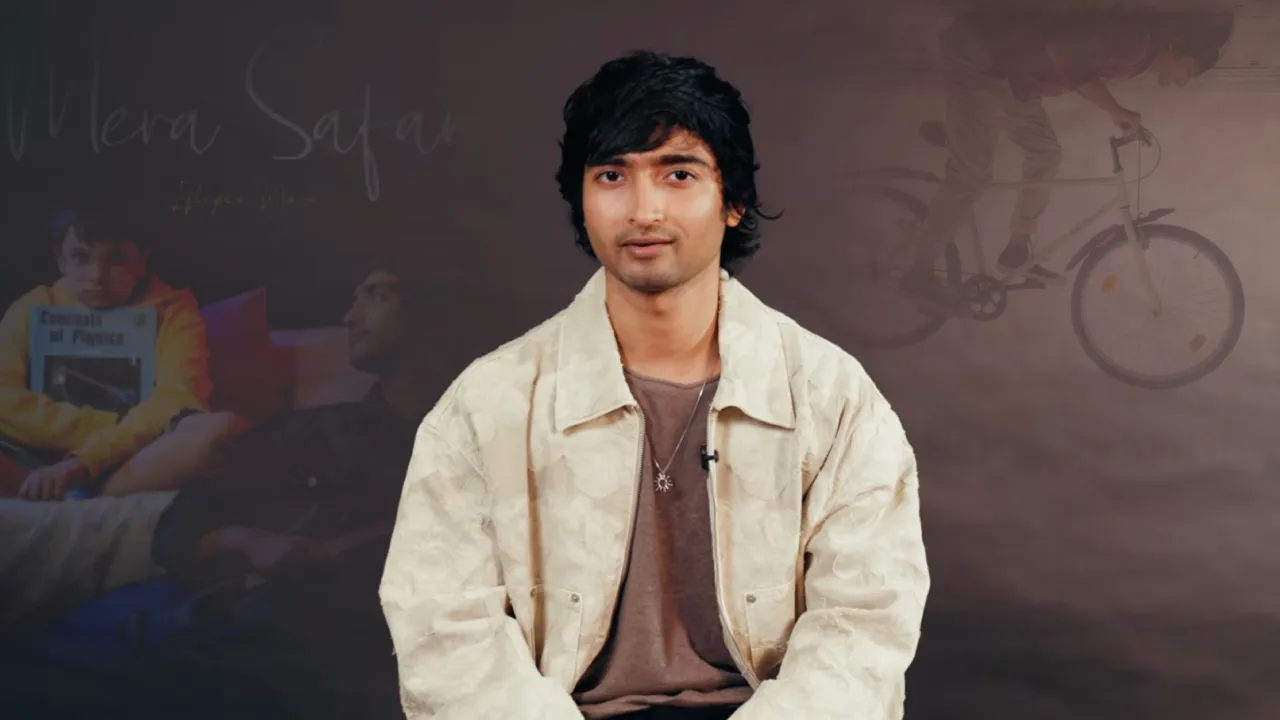

Veteran journalist and founding editor of the digital news powerhouse The Lallantop, Saurabh Dwivedi, recently shared profound insights into his high-profile career transition and personal life during an interview on the popular YouTube series Be A Man Yaar.
Speaking with host and youth media entrepreneur Nikhil Taneja, Dwivedi confirmed his professional move to the Indian Express, an established national daily known for its investigative prowess.
The wide-ranging conversation addressed the complexities of modern masculinity, the emotional toll of losing a parent, and the philosophy that guided his rise as one of India’s most influential Hindi-language media personalities.
Dwivedi detailed the professional motivations behind his exit from The Lallantop, the platform he famously helped build into a household name within the India Today Group.
He described the departure as an amicable move driven by a desire to explore new creative avenues and return to core reporting.
By joining The Indian Express, Dwivedi aims to focus on science communication and ground-level journalism, which he believes is the lifeblood of a functioning democracy.
The interview took a deeply personal turn as Dwivedi reflected on the duality of the past year, which saw the birth of his daughter, Nur, followed closely by the passing of his father.
He spoke candidly about the “hyper-masculine” expectations placed on men in Indian society, particularly in the rugged Chumbul region where he was raised.
Dwivedi argued that the traditional refusal to show vulnerability is a “terrifying lie” and advocated for men to embrace sensitivity and empathy.
He attributed much of his emotional intelligence to the influential women in his life, specifically his wife, Gunjan, whom he refers to as his “Ustad” (master or teacher).
Dwivedi credited her with broadening his perspective on everything from literature to social etiquette during their nearly 20-year relationship.
This educational touch is vital for aspiring creators, as it highlights how personal growth and varied influences can shape a unique and authoritative voice in the creator economy.
Dwivedi also touched upon the current state of Indian journalism, criticising the “shouting matches” often seen on prime-time television.
He advocated for a return to intellectual arguments and civil debate, explaining that the loud-voice-wins approach lacks the dignity required for true journalism.
This critique serves as a lesson for new content creators on the importance of substance over volume in building a lasting brand.
Beyond his professional accolades, Dwivedi discussed his commitment to social impact through a library project in his hometown in the Jalaun district. He emphasized that every village in India should have a library and a playground to foster learning and team-building.
This vision aligns with his belief in “Vipassana” (a form of meditation involving observing one’s inner self), which he credits for providing him with the clarity to navigate major life shifts.
Saurabh Dwivedi, an alumnus of Jawaharlal Nehru University (JNU) and the Indian Institute of Mass Communication (IIMC), rose to prominence by modernizing Hindi news for the digital age.
Under his leadership, The Lallantop garnered millions of subscribers by focusing on relatable storytelling and extensive election coverage.
His move to the Indian Express marks a significant shift in the Indian media landscape, signaling a bridge between traditional print excellence and digital-first audience engagement.