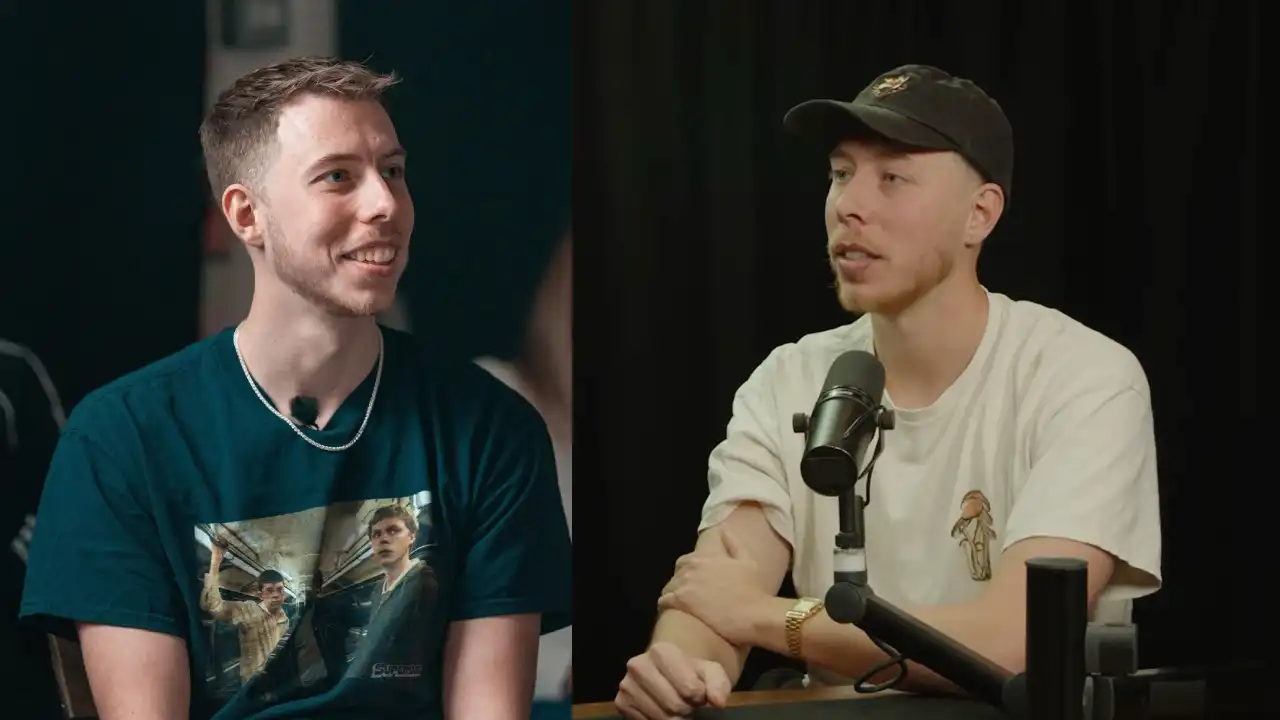
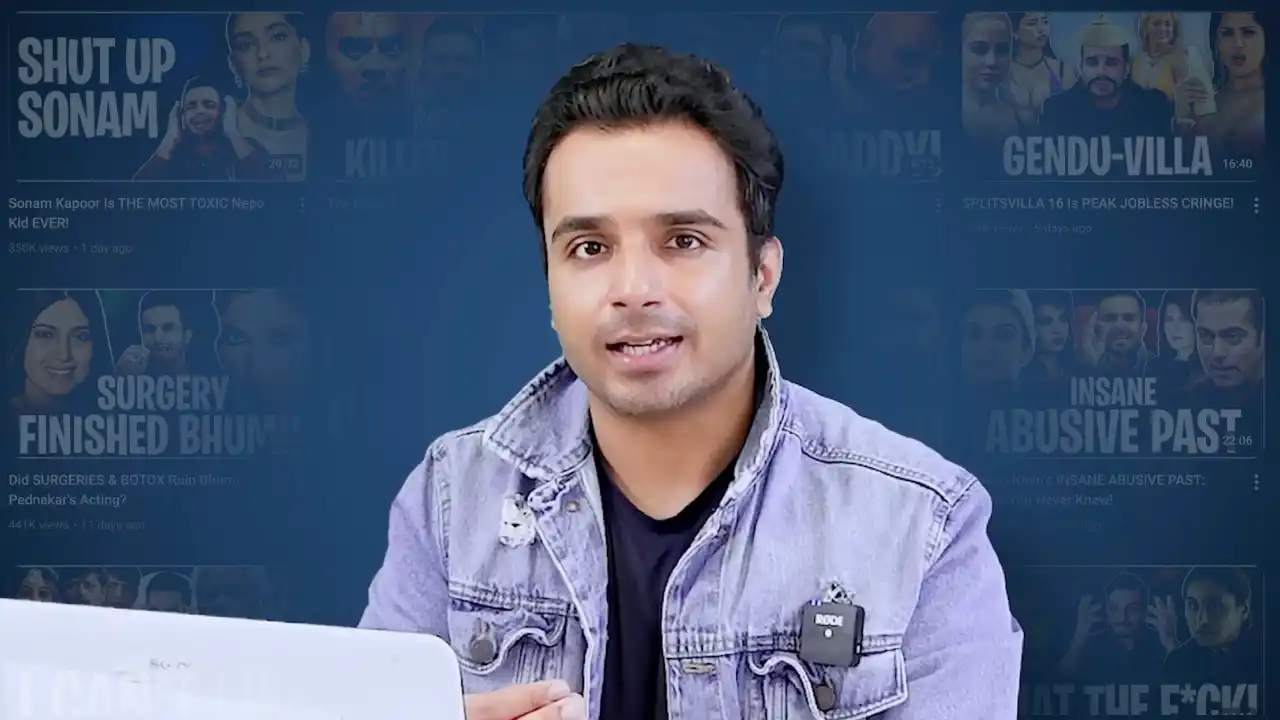
Popular film critic and YouTube personality Shan Prasher claimed that the modern Bollywood ecosystem is driven by a faceless army of public relations (PR) professionals who manufacture word-of-mouth success in as little as a week.
Speaking on the latest episode of Dostcast, hosted by writer and content creator Vinamre Kasanaa, Prasher argued that the traditional film journalist has become redundant, replaced by scripted paparazzi moments and pay-to-play review systems.
The shift from organic stardom to manufactured visibility represents a fundamental change in the creator economy. Prasher noted that in the 80s and 90s, it was impossible to “fake” a hit, whereas today, stars can pay for visibility packages to ensure they are seen on prominent paparazzi pages.
He explained that many actors now rely on Crisis PR, a strategic communication branch used to protect individuals from reputation-threatening challenges, to scrub negative headlines and rebuild images after box-office failures or personal controversies.
According to Prasher, this mechanical approach to fame has led to a generation of “Nepo Kids” who are fundamentally detached from the Indian audience.
He cited the inability of many new-age actors to speak fluent Hindi as a primary reason for their failure to connect with viewers in North India.
This lack of relatability is pushing audiences toward South Indian masala films, which Prasher described as sticking to a 30-year-old template of hero worship and “chappal-chaap” entertainment that remains highly effective at the box office.
The conversation also delved into the hyper-sexualization of Indian digital content, specifically what Prasher termed the “Bhabhi Culture”.
He highlighted that shows like Bhabhi Ji Ghar Par Hai and AI-generated content featuring television stars capitalize on deep-seated societal fantasies.
Prasher noted that statistics show this genre remains one of the most consumed forms of adult content in India, often disguised as family-friendly comedy or crime thrillers like Crime Patrol.
Prasher, who manages a YouTube channel with over 500K subscribers, is known for his “unfiltered” and often polarizing takes on Bollywood.
His recent deep-dive into the “Kapoor Sibling Curse” examines how influential production houses allegedly purchase awards for their children even after significant commercial losses.
The analyst concluded that while the power remains concentrated within four or five major families, the rise of independent directors like Aditya Dhar is beginning to rattle the traditional “mafia” structure of the industry.