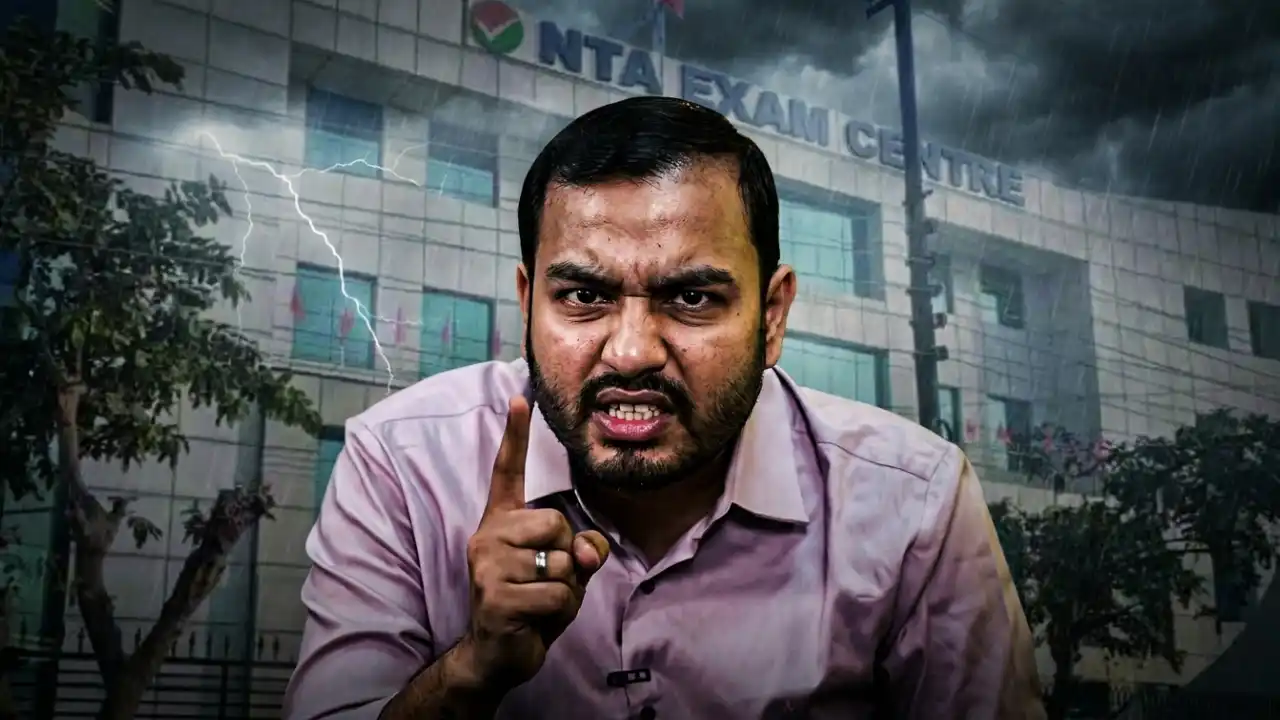
Physics Wallah founder and prominent educator Alakh Pandey criticized the National Testing Agency (NTA) for its failure to prevent recent paper leaks in the National Eligibility cum Entrance Test (NEET).
Pandey, who leads one of India’s largest educational technology platforms, described the incident as a compromise of the entire examination system rather than an isolated security breach.
During a recent interview with News Pinch, he highlighted the immense psychological and financial toll on nearly 22 lakh aspiring medical students who now face the uncertainty of re-examinations.
The NTA, an autonomous government agency responsible for conducting national-level entrance exams, has come under intense scrutiny for its handling of the May 2026 test.
Pandey questioned the agency’s pre-exam messaging, which he claimed projected an arrogant image of invincibility while failing to address early warning signs of the leak.
He pointed out that while students are subjected to extreme policing, such as bans on shoes, jackets, and non-transparent water bottles, the internal system remains vulnerable to corruption.
Alakh Pandey proposed a fundamental shift in how the medical entrance exam is conducted to prevent future syndicates from operating.
He suggested that the NTA should move away from the current single-day, pen-and-paper format (a physical exam using paper sheets) and adopt a digital, multi-shift model similar to the Joint Entrance Examination (JEE) for engineering.
According to Pandey, the offline model involves too many human touchpoints, from printing presses to transportation drivers, which increases the risk of information theft.
The edtech leader also called for severe legal consequences for both the “solver gangs” (organized groups that provide answers to leaked papers) and the wealthy parents who purchase leaked exams.
He argued that these actions should be treated as national threats, suggesting that current penalties fail to create a sufficient deterrent.
To support the affected student community, Pandey announced that his institution would provide free coaching for the re-examination, urging other coaching centers across India to waive fees for the 2026 cycle.
The controversy follows a history of legal friction between the educator and the testing body. Pandey previously filed a lawsuit against the NTA in 2024 regarding the awarding of grace marks (extra points given for lost time or errors), which led to a Supreme Court intervention.
His YouTube channel, which serves as a primary news and learning hub for millions of Indian students, has become a focal point for the “student voice” against perceived administrative negligence.
Alakh Pandey remains a central figure in the Indian creator economy, transitioning from a solo YouTuber to the head of a unicorn startup.
His platform, Physics Wallah, currently reaches tens of millions of subscribers and provides affordable education across various competitive exams.
He emphasized that without a total restoration of trust in the NTA, the number of students willing to participate in the national medical filtration system will continue to decline.