In today’s entertainment landscape, music promotions are no longer just about releasing a song; they’re about creating moments that resonate across generations, social platforms and fan communities.
The team behind Carry On Jatta 4 seems to understand this well, building their promotional strategy around a reimagined version of Dhol Jageero Da, one of Punjabi music’s most beloved celebration tracks, now brought to life through independent rapper, singer and songwriter Agsy.
This isn’t a straightforward recreation. The campaign is designed with intention, preserving the warmth and familiarity that has made the original a fixture at Punjabi weddings and gatherings for years, while simultaneously repackaging it for a younger generation that might be encountering it fresh.
The pairing of veteran singer Master Saleem with Agsy’s contemporary rap sensibility is the bridge that makes this possible, pulling in listeners from two very different eras without asking either to compromise.
Casting Agsy says something about where entertainment marketing is heading. Filmmakers are moving away from a purely playback-singer model and gravitating toward independent artists who carry genuine cultural weight.
Agsy has built her following the modern way, through streaming, original music and an active social presence, which makes her feel like a natural fit rather than a calculated insertion. She doesn’t just add credibility; she brings an audience with her.
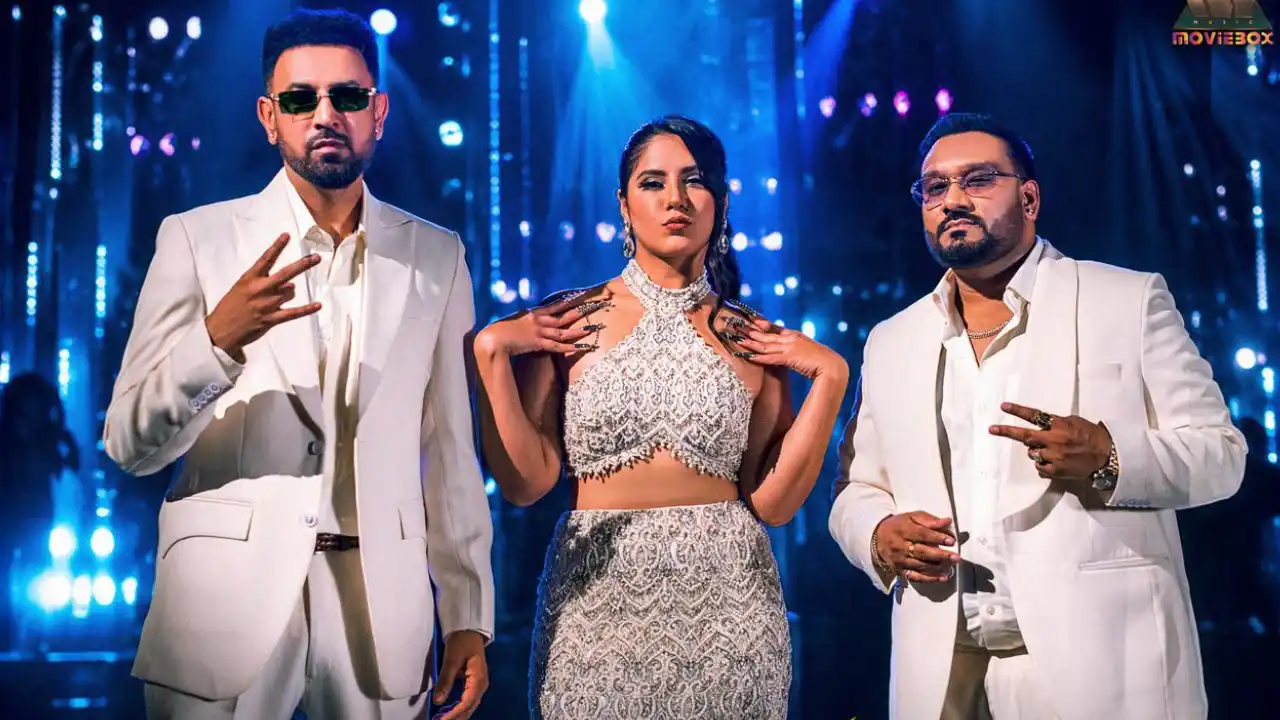
The collaboration also extended well beyond the recording booth. Agsy appears alongside Gippy Grewal in the music video itself, elevating her role from featured vocalist to creative presence.
That distinction matters as it shifts the entire campaign from conventional film promotion toward something more closely resembling a creator-led project, with its own visual identity and storytelling potential across music and digital spaces.
Perhaps the most culturally interesting layer is how the campaign frames Agsy as the “Gen Z Jageero.” Jageero, as a cultural figure, has long represented a vivacious, self-assured young Punjabi woman at the centre of the celebration.
Threading that archetype through the lens of a contemporary female rapper keeps the emotional core intact while giving it a presence that today’s audiences can actually see themselves in.
What this campaign also reflects is a changing attitude toward nostalgia in marketing. Rather than treating classic content as something to be preserved behind glass, the makers of Carry On Jatta 4 have treated it as living material, something that can be reshaped and re-entered into cultural conversation.
The result is a campaign that works on two levels at once, speaking to those who already love the original and those who are arriving at it for the first time.
For the wider Punjabi film industry, this signals a real shift in how promotional strategy is being conceived. Independent artists are no longer simply hired to contribute a voice; they are being woven into the creative fabric of the campaign itself, with the power to shape how a film is talked about and who it reaches.
Dhol Jageero Da 2.0 makes a clear case for what modern entertainment marketing can look like when heritage, independent artistry and digital thinking are brought together deliberately. The result is a campaign that doesn’t just support a film; it takes on a life of its own.