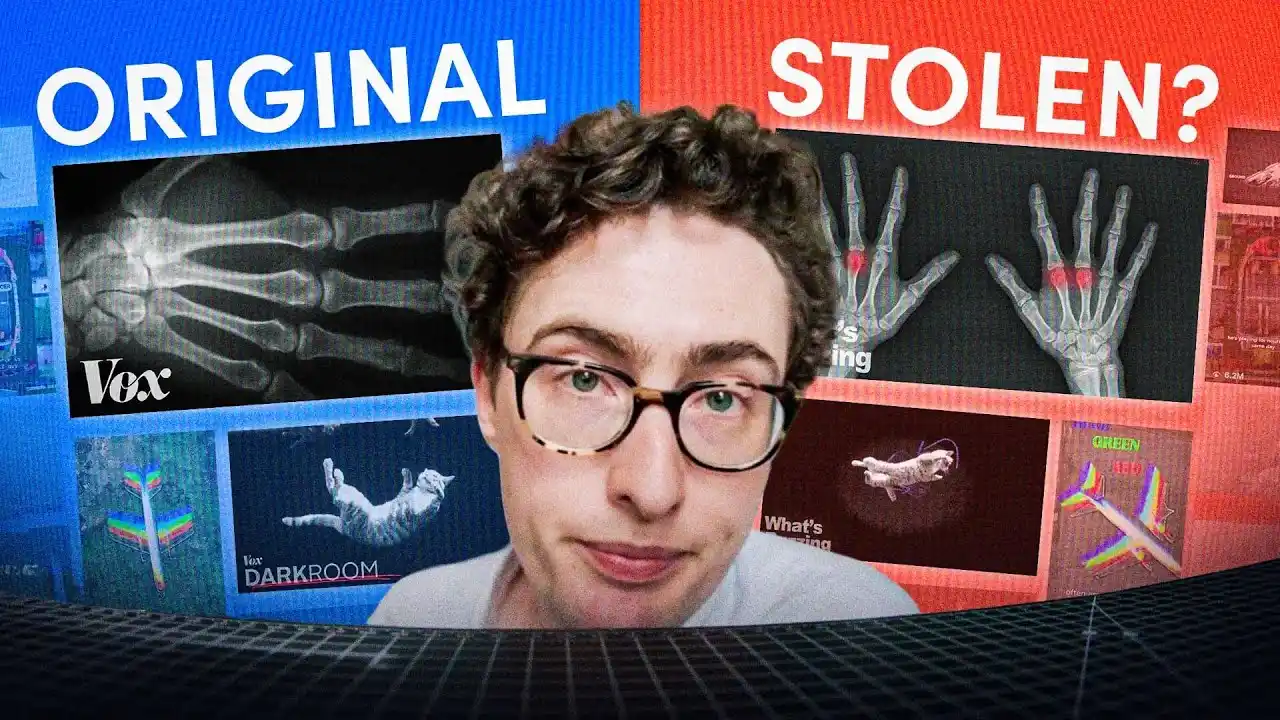
In a thoughtful and unsettling episode of his YouTube show Tunnel Vision, journalist-turned-creator Christophe Haubursin pulls back the curtain on a rising crisis: the surge of AI-generated “copycat” channels on YouTube that mimic original creators’ work with astonishing accuracy.
According to Haubursin, these channels don’t just borrow ideas; they often re-engineer entire videos using voice-cloning, scripted edits, and minimal foreign-language tweaks, leaving the original creators caught in a loop of frustration and helplessness.
Haubursin, formerly a senior producer at Vox Media and host of “Glad You Asked” has turned his storytelling lens on this modern dilemma. His investigative video details how, after posting a popular explainer, he found a channel uploading a shot-for-shot remake in another language, complete with his style, structure and even pacing. What’s worse, the remake sometimes outperformed the original in views, clicks and monetisation.
The episode chronicles several chilling patterns: AI-generated remakes that keep the same visual structure, almost identical scripting lines slightly re-phrased, and voice-cloned narrations that replicate the tone and cadence of original creators.
One standout example: a channel polishing a full remake of a Haubursin original in Arabic, changing none of the key visuals but simply swapping out the language, enough to bypass YouTube’s automated Content ID filters, yet close enough to feel like his work echoed back at him.
From a legal standpoint, Haubursin explains the mess goes deeper. Under US copyright law and similar regimes globally, ideas and facts are not protected, only the expression of them is.
That means if someone takes the core idea (say, “How skyscrapers are built”), repackages it with new visuals or voice, and posts it, they may be legally safe. Unless the new work copies the exact expression, script, unique footage, and precise editing. They’re usually in the clear. Haubursin calls this the “idea-expression dichotomy.”
“You can’t copyright a fact, but you can copyright how you told it. The problem is AI and greedy creators are perfectly fine re-telling your story just differently enough.”
Original creators are facing a double-edged challenge: One, they must not only create but constantly guard their work from cheap remakes that flood the algorithm.
Two, the algorithm often rewards volume and novelty, whereas real creators invest deeply in nuance, quality and research, a slower process that doesn’t scale as fast.
Haubursin interviewed so-called “repurposers” who treat viral content like raw material: scan what’s trending, run it through AI or clone it manually, upload under a new channel, monetise quick before enforcement kicks in. The result? The original creator gets the recognition, the remake gets the money and the views.
Haubursin concludes his video with a striking admission: legal protections are thin, enforcement is inconsistent, and many creators feel defeated. He urges a new model of creator rights, community support and platform responsibility.
Haubursin’s investigation isn’t just a warning; it’s a mirror held up to YouTube’s evolving ecosystem. He essentially asks: when AI can clone voices, scripts and visuals at scale, how do you protect originality in an economy built on views and clicks?
Creators and industry observers alike are paying attention to this episode because it ties into broader debates on creator monetisation, platform fairness and automated abuse. Haubursin’s voice carries weight because of his background (with Vox and Netflix credits) and because he documents his own experience, not just third-party anecdotes.
In short, Christophe Haubursin isn’t just covering the rise of copycat channels; he’s sounding the alarm. For creators who thought their unique voice, style, and effort made them safe, this investigation shows a different reality: in the era of AI clones and remixed content, safeguarding originality may require more than talent; it may require strategy, community and new industry rules.