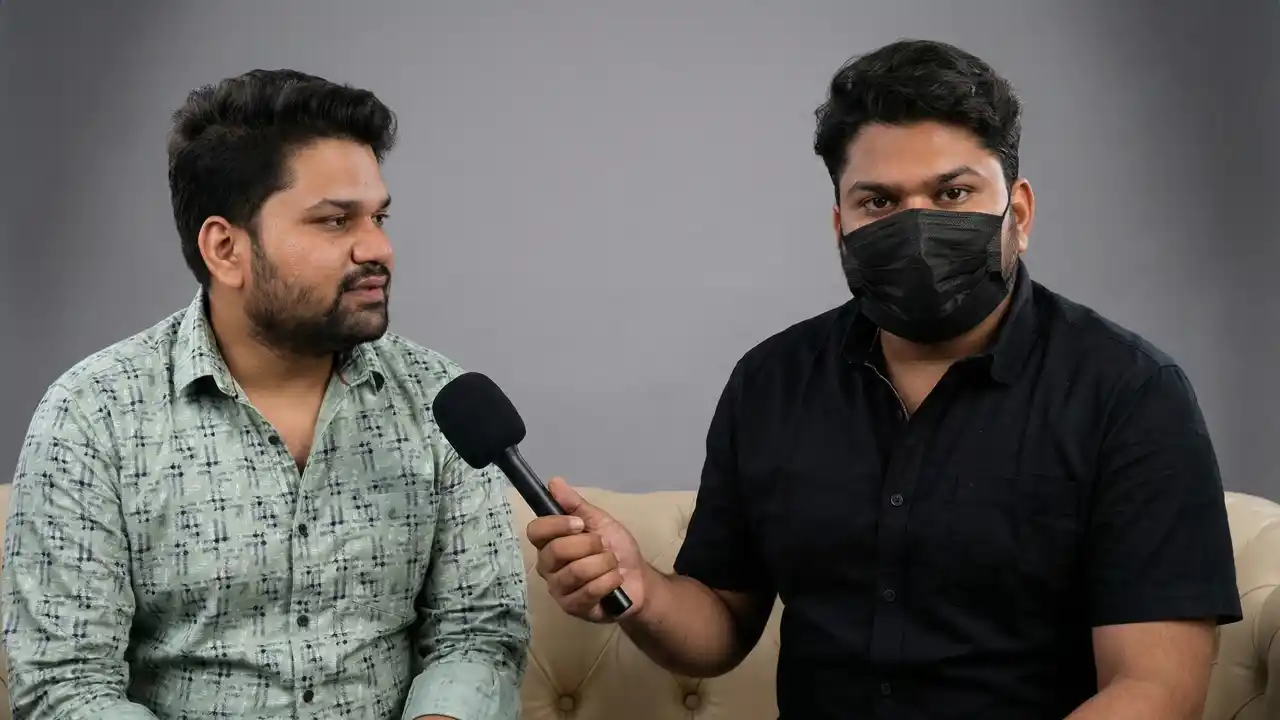
Popular satirical creator and actor Harsh Rajput, best known for his viral persona Dharmendra Dhakad on the Dhakad News channel, revealed that he has rejected multiple offers from Bollywood and the Bhojpuri film industry to maintain his creative freedom and dominance on YouTube.
Speaking on the Half Engineer podcast, Rajput explained that he would rather be a king in the digital space than play an insignificant or “servant” role in a major motion picture.
The creator, who rose to fame for his raw and aggressive reporting style comedy videos, emphasised that the impact of a role matters more to him than the prestige of the silver screen
Harsh Rajput specifically cited an instance where he turned down a role in a high-profile Bollywood project starring Shahid Kapoor because the character lacked depth and influence.
He argued that traditional media often fails to offer digital stars the respect or screen presence they have already built independently.
By staying on YouTube, Rajput maintains full control over his brand and narrative, a move that highlights the growing power shift in the creator economy.
The journey to this level of independence was marked by extreme financial hardship, including a period where Rajput was surviving on just 200 rupees.
Harsh Rajput detailed his journey from a small district in Bihar to becoming a household name in the Indian digital space, emphasising the risks he took to find a unique voice in a crowded market.
Before finding success online, Rajput moved to Delhi with the intention of pursuing a stable career in the civil services or the Indian Railways. After realising that academic pursuits like the UPSC were not his calling, he transitioned into theatre at Mandi House, Delhi’s cultural hub.
He explained that his theatre background provided him with the necessary lack of inhibition required for his current guerrilla style of filmmaking, which often features improvised dialogue and raw street interactions.
Rajput’s first major breakthrough occurred during the pandemic when he invested his last ₹200 into producing a video about a wedding during the lockdown. The video went viral almost immediately, generating significant revenue through YouTube AdSense within 24 hours.
He noted that at one point, his channel was among the fastest-growing in the world, proving that audiences were hungry for authentic, albeit aggressive, humour that mirrored real-life frustrations.
Rajput also took a sharp stance against the Bhojpuri film industry, criticising it for a lack of innovation and a reliance on vulgarity. He stated that he would only consider a move into regional cinema if the scripts matched the technical and storytelling standards of South Indian films.
For now, he is focusing on digital-first collaborations, including a major deal with the BGMI game to launch a dedicated Bhojpuri voice pack for the gaming community.
The creator concluded by addressing the “fake” nature of the influencer industry, noting that many creators use PR and paid memes to manufacture fame.
Unlike those who buy their reach, Rajput credits his 5 million-plus average views to his theatre-trained authenticity and a loyal audience that spans from rural Bihar to urban centres. He believes that the longevity of a career in the digital space depends on high watch time and genuine audience trust.