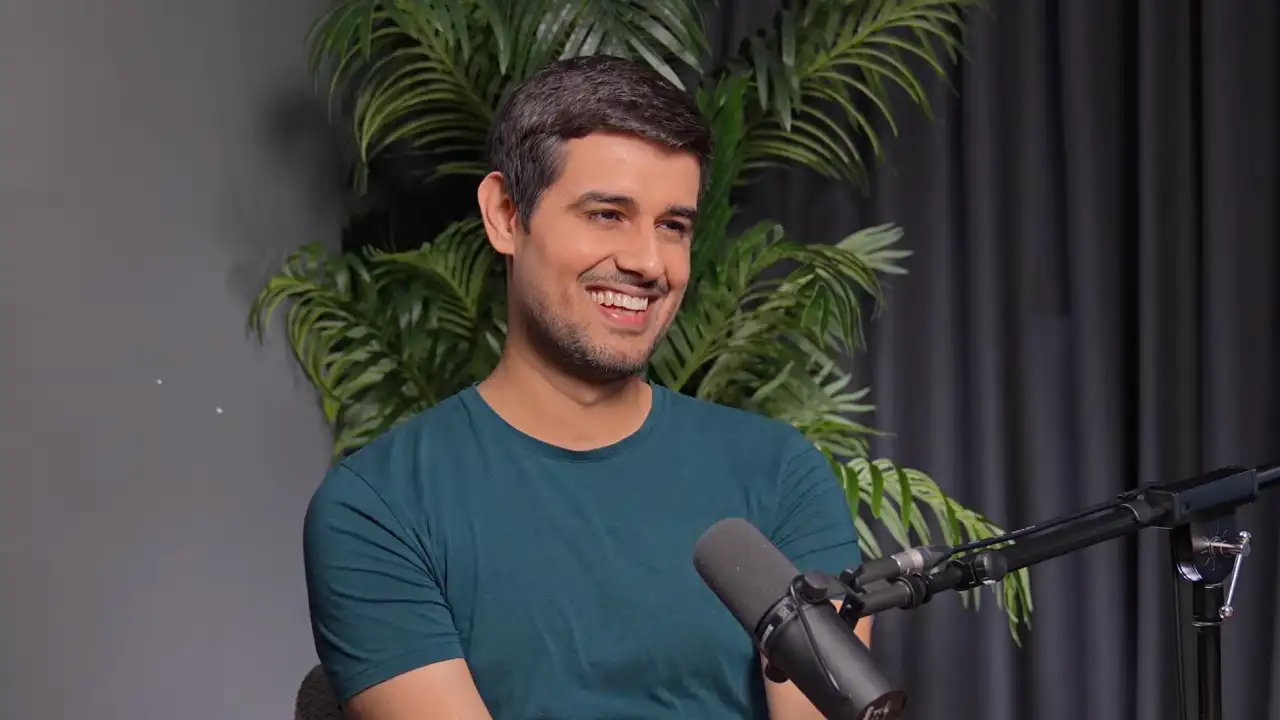
Popular social media educator and socio-political content creator Dhruv Rathee said that the frequent German Shepherd slurs directed at him are historically more applicable to the Rashtriya Swayamsevak Sangh (RSS).
Speaking in an expansive interview on the Learn By KK Create channel, Rathee claimed that the RSS’s organisational structure and drills were heavily inspired by German and Italian paramilitary groups of the 1930s.
The creator, who currently manages a massive digital footprint of over 30 million subscribers, argued that those using the slur often lack an understanding of the very ideologies they claim to represent.
Rathee explained that his decision to reside in Germany is driven by both personal and professional necessity. He moved to the country at age 17 for his undergraduate studies, long before his YouTube career began, and eventually chose to stay to ensure the comfort of his partner, Juli Lbr.
Professionally, Rathee noted that the physical distance from India acts as a shield against the intense pressure of celebrity worship, allowing him to remain grounded and objective in his reporting.
The interview also delved into the financial and technical operations of his content empire. Rathee revealed that his revenue is evenly split between YouTube AdSense, brand sponsorships, and his private educational courses.
To maintain the integrity of his scripts, he utilizes Artificial Intelligence (AI) for fact-checking and visual generation, though he emphasized that human editors must always verify the data to prevent AI hallucinations.
Addressing the current state of Indian cinema, Rathee criticized recent high-grossing films for acting as political propaganda tools.
He specifically noted that films like Dhurandhar use government slogans to influence public perception, creating an uneven playing field in the cultural landscape.
He alleged that the national censor board often behaves as an extension of the ruling party, allowing pro-government narratives to flourish while stalling films that offer a critical or alternative view of the country’s leadership.
Dhruv Rathee concluded by calling for a structural overhaul of the Indian media industry. He suggested that all government funding to news channels should be banned to ensure true journalistic independence, forcing outlets to rely on direct viewer support instead.
Despite the frequent online attacks and coordinated IT cell campaigns against him, Rathee maintained that his focus remains on promoting scientific temper and civic sense among his predominantly young audience.